 Revnova
“Quality bespoke furniture” is what everyone says
Bespoke joinery is a trade where every website says the same thing: quality, tradition, a personal approach. Meanwhile the customer weighing up a kitchen worth a few hundred thousand koruna is not thinking about adjectives — they are thinking about whether they will get an exact price, whether the date will hold and whether there will be a mess left behind after the fitting. Those are three specific worries, and a website that names them before anyone has to ask is halfway to winning the job.
A photograph of wood instead of a headline about quality
The opening of the site is not a collage of finished kitchens but a close-up of a hand running along the edge of an oak table. The grain of the wood in a large photograph does more for trust than five paragraphs about honest craft — it is the one thing the customer really can judge for themselves. Beside the photograph stands a single sentence about what the workshop does, and two buttons: enquiry and phone.
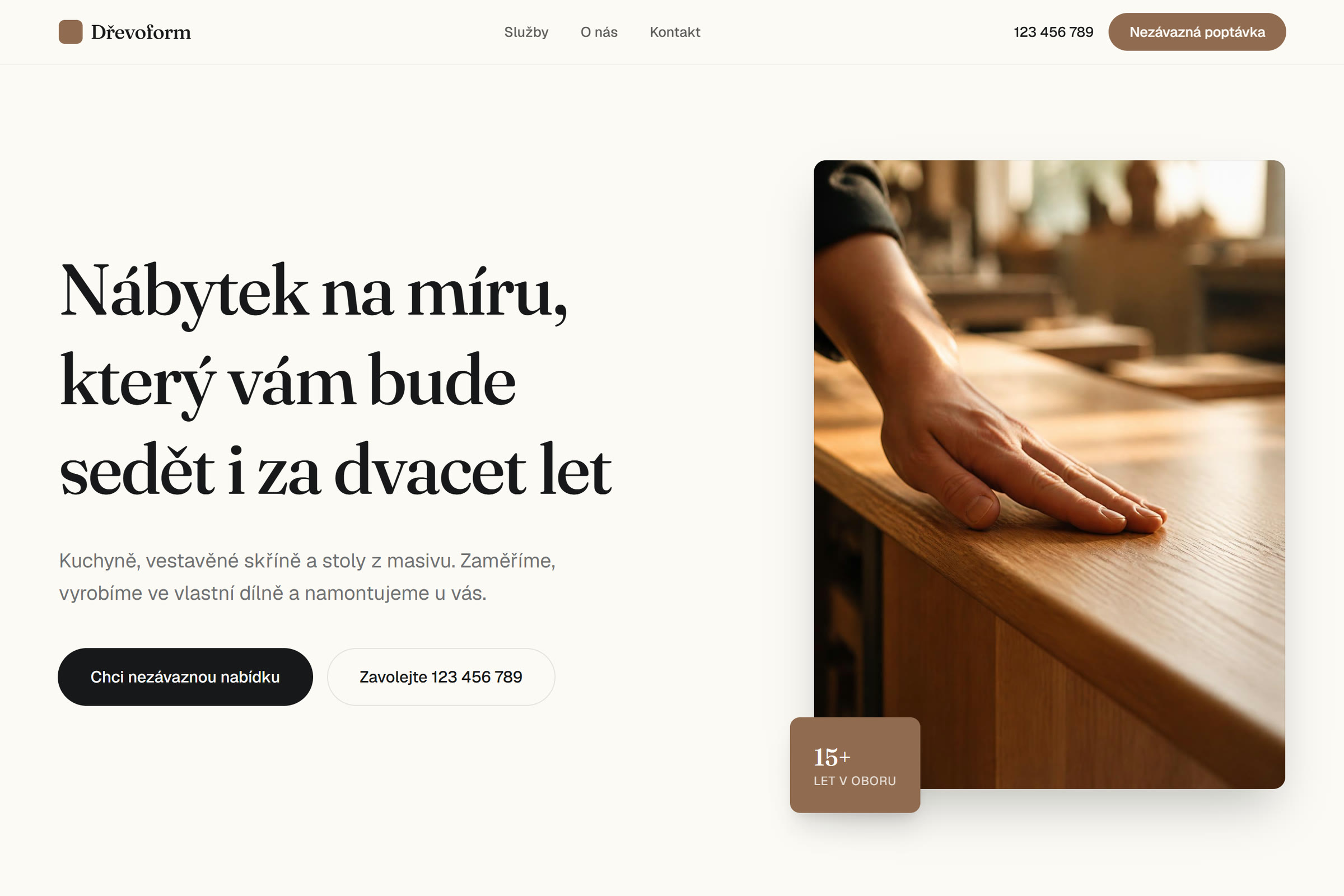
The second decision is to drop the price list. In bespoke work no figures exist in advance, and pretending otherwise means disappointing the customer on the very first call. In place of prices the site promises something more concrete: a free survey and design, the price in writing, the date in the contract. Those are promises the workshop can keep — which is exactly why they work.
Three services, four worries, one form
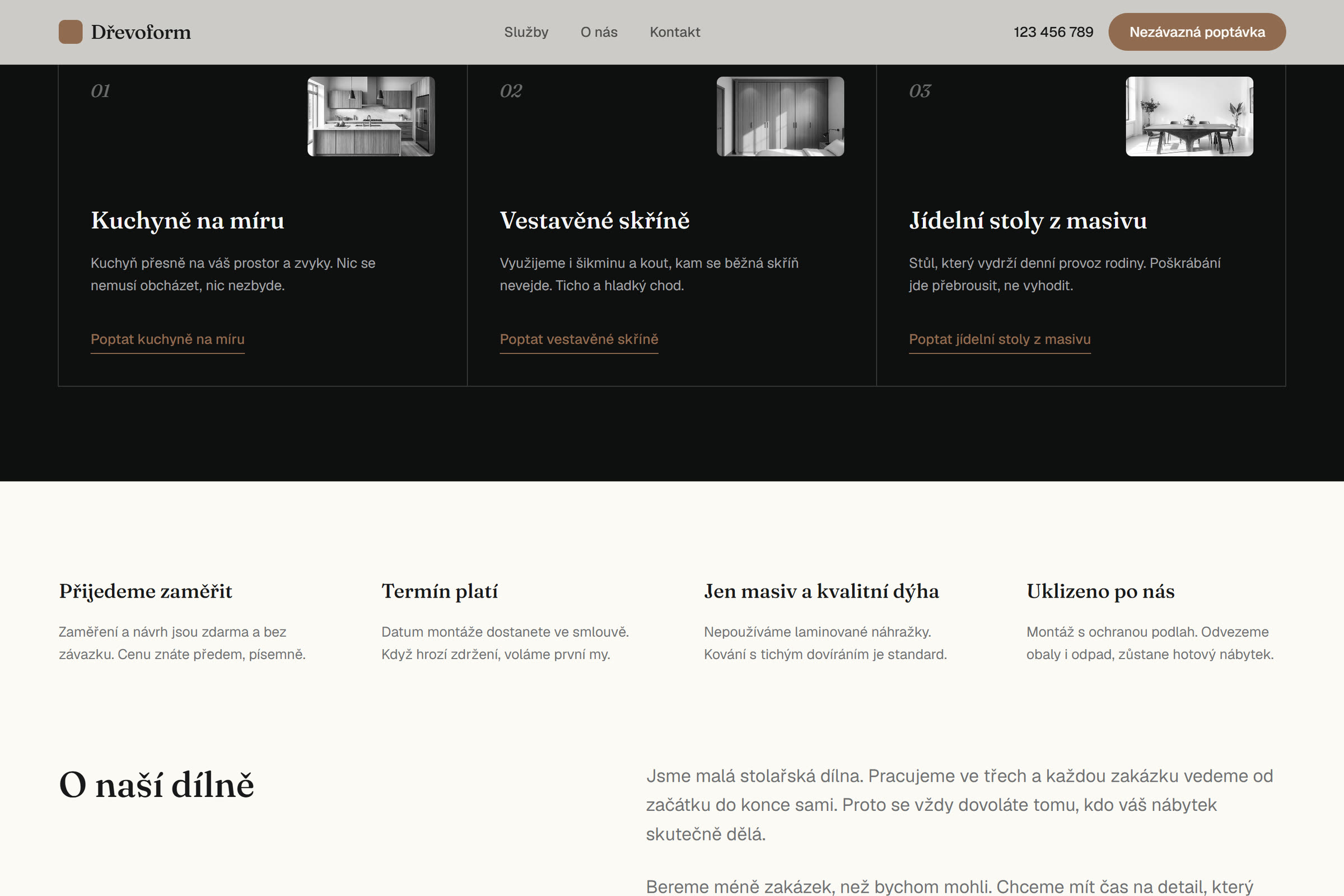
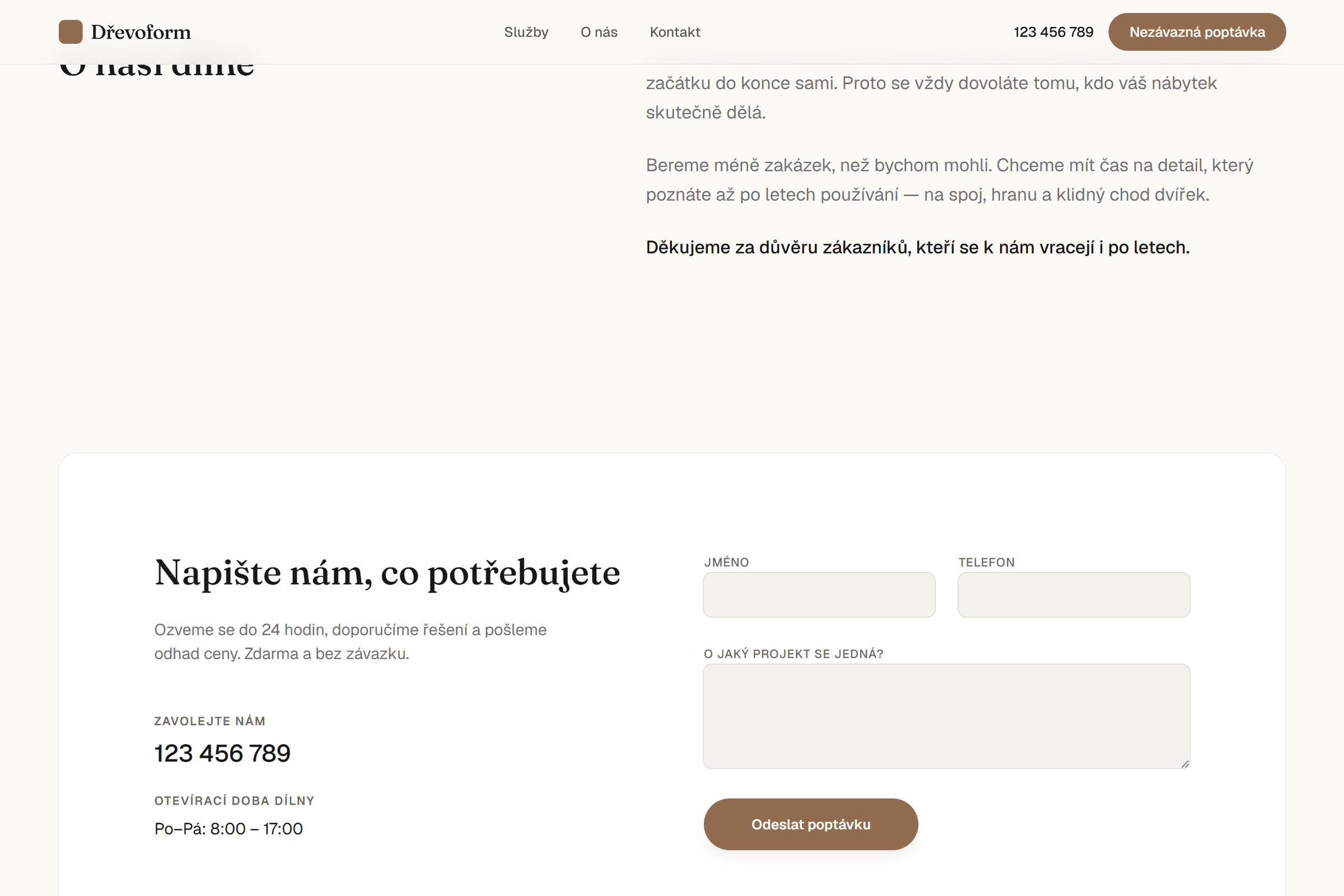
The dark services section works like a shop window: kitchens, fitted wardrobes and dining tables, each with its own photograph that lights up from black and white into colour only when the visitor moves over it. After it come four points that answer the customer’s four worries exactly — from the free survey to clearing up after the fitting. Nothing more; any further section would only push the enquiry form further away.
Typographically the site alternates a serif heading with calm sans-serif text; the palette is paper white, charcoal grey and a single warm accent the colour of wood. No gradients, no shadows for their own sake. The page is static, opens instantly and reads as well on a phone in the living room as on a monitor in the office.
What you deliberately will not find on the site are reviews. For a workshop that takes a handful of commissions a year, invented stars would be the most easily disproved claim on the whole page — and a single lie once caught throws doubt on everything else. So Dřevoform talks about the trust of returning customers in general terms and without quotation marks. Real references get their place the moment there are any.

An enquiry you can fill in inside thirty seconds
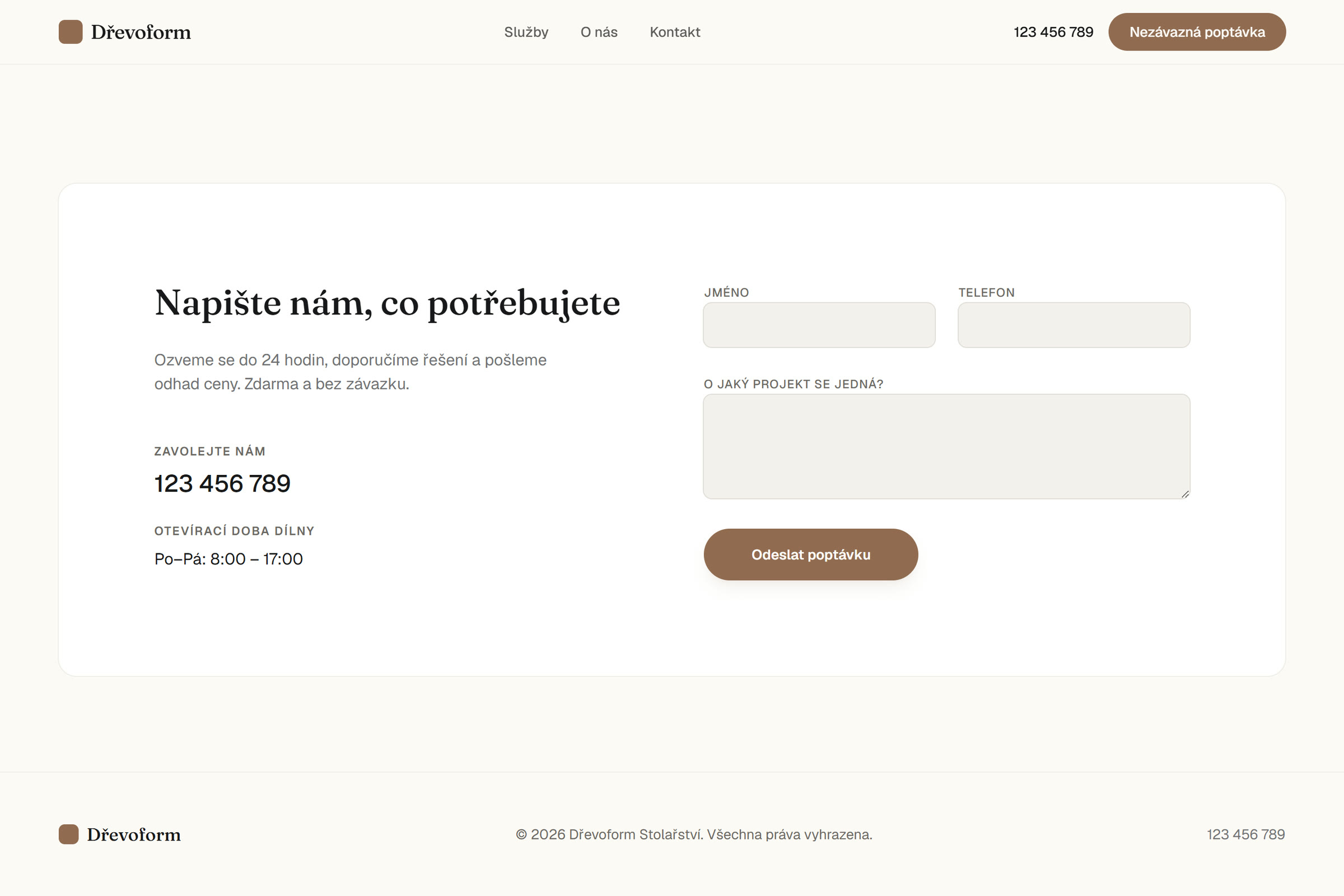
Name, phone number, what you need. The form asks for nothing else — every extra field is a reason for somebody not to finish it. The workshop will find out the details at the survey it has to attend anyway; the job of the website is only to get the contact.
We measure a conversion website by enquiries and calls — and because Dřevoform is a fictional brand, we are not going to invent any figures. What can be measured: the page is static and light, opens practically instantly, holds full contrast and works with a screen reader. The furniture photographs, which are the heaviest part, are fetched only once the visitor scrolls down to them.
Open the live demo Dřevoform — in CzechThis is how we build websites for craft workshops and local firms that need enquiries — if that is your situation, get in touch and we will go through what it would involve for you.
Book a consultation